
 영어
영어
 독일 사람
독일 사람
 일본어
일본어
 포르투갈 인
 멕시코
멕시코
 네덜란드 사람
TPS61240
The TPS61240 is a high-efficiency, synchronous buck-boost converter designed by Texas Instruments for applications requiring flexible input voltage ranges and stable output regulation. It supports an input voltage range from 0.8 V to 5.5 V, making it ideal for single-cell battery-powered systems where the supply voltage varies significantly during discharge. The device can deliver up to 1.5 A of continuous output current, ensuring reliable power delivery to demanding loads such as microcontrollers, sensors, and wireless modules.
This converter operates in either buck or boost mode depending on the input-to-output voltage relationship, enabling seamless operation across different battery states—from fully charged to nearly depleted. Its integrated high-side and low-side MOSFETs reduce external component count and improve efficiency, while the synchronous rectification minimizes power loss and heat generation. The internal control loop ensures fast transient response and low output ripple, critical for maintaining signal integrity in sensitive analog circuits.
The TPS61240 features adjustable output voltage via an external resistor divider, allowing system designers to tailor the output to specific application needs. It also includes built-in protection mechanisms such as over-current protection (OCP), thermal shutdown, and under-voltage lockout (UVLO), enhancing reliability and safety in harsh environments. The device supports a low quiescent current of just 3 μA in shutdown mode, minimizing standby power consumption—key for extending battery life in portable electronics.
Designed for compact designs, the TPS61240 comes in a small 3 mm × 3 mm WQFN package, reducing PCB footprint while maintaining excellent thermal performance. It operates at a fixed switching frequency of 2 MHz, which allows the use of small inductors and capacitors, further contributing to miniaturization. The converter’s wide operating temperature range—from -40°C to +125°C—makes it suitable for industrial, automotive, and consumer applications that demand robustness and long-term stability.
Applications include wearable devices, IoT sensors, medical instruments, and portable audio equipment, where efficient power management, small size, and extended battery life are essential. Its ability to maintain stable output regardless of input fluctuations makes it particularly effective in battery-backed systems that must remain operational even as the battery voltage drops below the load's minimum requirement.
Related Parts
| 부분 # | 제조업체 | 설명 | 유효성 | 가격 | 수량 |
|---|---|---|---|---|---|
 TPS61240YFFRDC Switching Voltage Regulators | Texas Instruments | 5V, 450mA, 4MHz Boost DC/DC Converter, 2.3-5.5V In, 85°C | 5841 | 1+: $0.60130 10+: $0.48130 30+: $0.42060
더 보기 | |
TPS61240YFFTDC Switching Voltage Regulators | Texas Instruments | 5V 450mA 4MHz Boost DC/DC Converter, SM | 391 | - | |
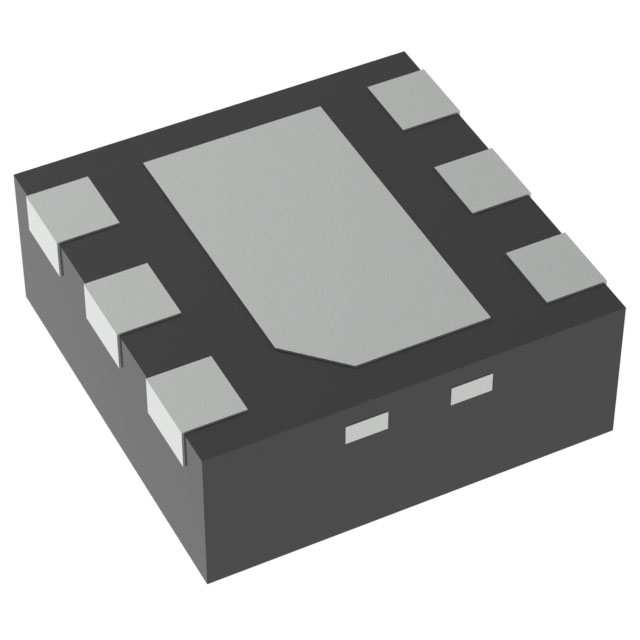 TPS61240DRVTDC Switching Voltage Regulators | Texas Instruments | 5V, 450mA, 4MHz Boost DC/DC Converter, SON | 50 | 1+: $1.61320 10+: $1.34380 30+: $1.19430 | |
TPS61240DRVRDC Switching Voltage Regulators | Texas Instruments | 5V 450mA 4MHz Boost DC/DC Converter IC | 23 | 1+: $0.58790 10+: $0.47870 30+: $0.42330
더 보기 |





.png?x-oss-process=image/format,webp/resize,h_32)


