
 영어
영어
 독일 사람
독일 사람
 일본어
일본어
 포르투갈 인
 멕시코
멕시코
 네덜란드 사람
TLV9151-Q1
The TLV9151-Q1 is a high-performance, low-power operational amplifier manufactured by Texas Instruments, specifically designed for automotive and industrial applications requiring enhanced reliability and precision. It operates from a single supply voltage ranging from 2.7 V to 5.5 V, making it suitable for a wide variety of power-efficient systems. The device features a bandwidth of 3 MHz, enabling fast response times and accurate signal processing in dynamic environments.
This amplifier offers rail-to-rail input and output capabilities, allowing full utilization of the supply voltage range without signal distortion. Its low quiescent current—typically 100 µA per channel—ensures minimal power consumption, ideal for battery-powered or energy-sensitive designs. The TLV9151-Q1 also provides excellent DC accuracy, with a typical input offset voltage of 1 mV and a maximum drift of 4 µV/°C, ensuring stable performance over temperature variations.
Designed to meet AEC-Q100 Grade 1 qualification standards, the TLV9151-Q1 is built for harsh automotive environments, including extreme temperatures from -40°C to +125°C. It supports both inverting and non-inverting configurations, making it versatile for use in sensor interfaces, filter circuits, level shifting, and signal conditioning tasks. Additionally, the device includes internal EMI filtering and protection against electrostatic discharge (ESD), enhancing robustness in noisy electrical systems.
The TLV9151-Q1 is commonly used in automotive applications such as battery management systems, electric power steering, and ADAS sensors, where precision, low noise, and long-term stability are critical. In industrial settings, it supports analog signal conditioning in PLCs, process control, and data acquisition systems. Its small package options—including the SC-70 and SOT-23—facilitate compact board layouts while maintaining thermal efficiency.
With its combination of high gain, low noise, and automotive-grade reliability, the TLV9151-Q1 delivers a robust solution for demanding analog front-end applications. It enables designers to achieve superior signal integrity and system efficiency in space-constrained and safety-critical environments.
Related Parts
| 부분 # | 제조업체 | 설명 | 유효성 | 가격 | 수량 |
|---|---|---|---|---|---|
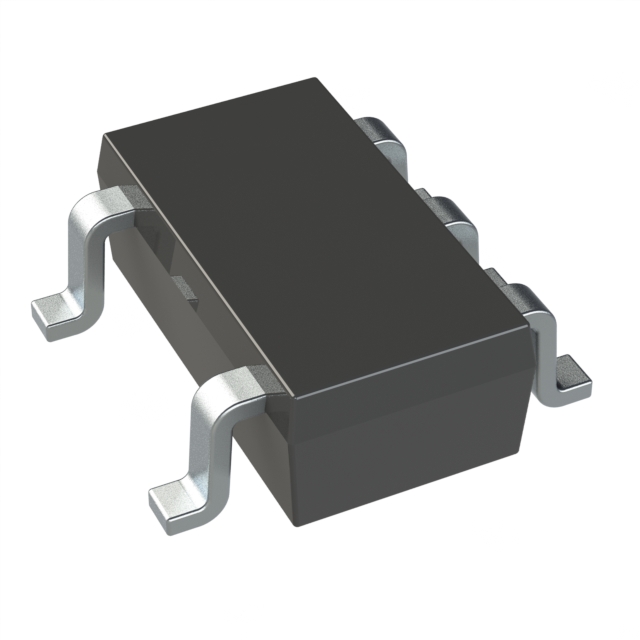 TLV9151QDBVRQ1OP Amps, Buffer Amps ICs | Texas Instruments | IC OPAMP | 75 | 1+: $1.08515 10+: $0.88972 30+: $0.78172 | |
 TLV9151QDCKRQ1OP Amps, Buffer Amps ICs | Texas Instruments | Operational Amplifiers - Op Amps Automotive single-c hannel 16V 4.5MHz | 2602 | - | |
TLV9151SQDBVRQ1OP Amps, Buffer Amps ICs | Texas Instruments | Operational Amplifiers - Op Amps Automotive single-c hannel 16V 4.5MHz | 2997 | - |





.png?x-oss-process=image/format,webp/resize,h_32)


