
 영어
영어
 독일 사람
독일 사람
 일본어
일본어
 포르투갈 인
 멕시코
멕시코
 네덜란드 사람
DRV3901-Q1
The DRV3901-Q1 is a high-efficiency, automotive-grade LED driver designed for demanding lighting applications in passenger vehicles. It features a wide input voltage range from 4.5 V to 36 V, making it suitable for both standard and high-voltage automotive systems, including 12 V and 24 V networks. The device supports up to 12 parallel LED strings, each capable of driving up to 1.5 A, enabling flexible configuration for complex lighting setups such as headlights, taillights, or interior ambient lighting.
This driver integrates a high-side current sensing circuit with an internal sense resistor, allowing precise current regulation across all LED strings without requiring external components. Its PWM dimming control supports a wide dimming range—from 0.1% to 100%—with minimal flicker, ensuring smooth brightness transitions essential for modern vehicle lighting. Additionally, the DRV3901-Q1 includes built-in protection features such as overcurrent, overtemperature, short-circuit, and open-load detection, enhancing system reliability and safety in harsh automotive environments.
The chip operates with a fixed-frequency PWM controller (typically 100 kHz) and supports both analog and digital dimming inputs, providing design flexibility for integration with microcontrollers or CAN-based control systems. Its low quiescent current and efficient switching topology reduce power loss, improving overall energy efficiency—a critical factor in electric and hybrid vehicles where thermal management and battery life are paramount.
Designed for AEC-Q100 Grade 1 qualification, the DRV3901-Q1 meets stringent automotive reliability standards, ensuring robust performance under extreme temperatures (-40°C to +125°C) and mechanical stress. It is commonly used in front and rear lighting modules, adaptive driving beam systems, and interior lighting solutions where precision, durability, and compliance with automotive safety regulations are mandatory.
With its compact 48-pin QFN package and integrated diagnostics, the DRV3901-Q1 simplifies board layout while reducing component count and BOM cost. Its programmable features, such as adjustable rise/fall times and fault response delays, allow engineers to fine-tune performance based on specific application requirements. This makes it an ideal choice for OEMs seeking scalable, reliable, and compliant lighting solutions in next-generation automotive designs.
Related Parts
| 부분 # | 제조업체 | 설명 | 유효성 | 가격 | 수량 |
|---|---|---|---|---|---|
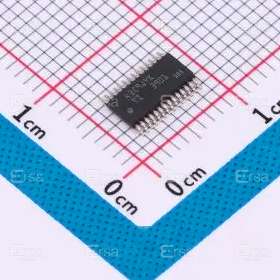 DRV3901QDGQRQ1Specialized Power Management | Texas Instruments | AUTOMOTIVE, 40-V SINGLE-CHANNEL | 3 | 1+: $10.86685 10+: $9.21600 30+: $8.20972 |





.png?x-oss-process=image/format,webp/resize,h_32)


