
 영어
영어
 독일 사람
독일 사람
 일본어
일본어
 포르투갈 인
 멕시코
멕시코
 네덜란드 사람
MPC560xP
The MPC560xP is a high-performance 32-bit Power Architecture microcontroller series from NXP Semiconductors, designed for demanding automotive and industrial applications. Built on the Power ISA 2.03 instruction set, it features a robust core operating at up to 133 MHz, delivering exceptional computational power while maintaining low power consumption. The device integrates a dual-core architecture with a main CPU and a dedicated safety monitoring core, enabling real-time fault detection and system reliability critical in safety-critical environments.
Key features include a large on-chip memory subsystem comprising up to 1 MB of flash memory and 128 KB of SRAM, supporting fast boot times and efficient code execution. The MPC560xP includes advanced peripherals such as multiple high-resolution PWM modules, high-precision ADCs (up to 16-bit resolution), and flexible communication interfaces like CAN, LIN, SPI, and I2C, making it ideal for sensor fusion, motor control, and signal processing tasks. It also supports secure boot and cryptographic acceleration through integrated hardware security modules, enhancing protection against tampering and unauthorized access.
This microcontroller series is optimized for automotive applications such as electric power steering (EPS), brake systems, engine management, and transmission control units (TCUs). Its robust electromagnetic compatibility (EMC) performance and wide operating temperature range (-40°C to +150°C) ensure reliable operation in harsh vehicle environments. Additionally, the MPC560xP supports ISO 26262 ASIL-B compliance, enabling developers to meet stringent functional safety standards required in modern vehicles.
The device provides comprehensive development support via NXP’s S32 Design Studio, including debug tools, real-time operating system (RTOS) integration, and pre-validated drivers. This accelerates time-to-market and reduces development risk. With its scalable architecture, the MPC560xP allows seamless migration across different product variants, offering flexibility for evolving design requirements without redesigning the entire system.
Related Parts
| 부분 # | 제조업체 | 설명 | 유효성 | 가격 | 수량 |
|---|---|---|---|---|---|
 SPC5603PF1VLL6Microcontrollers | NXP Semiconductors | IC MCU 32BIT 384KB FLASH 100LQFP | 재고 | - | |
SPC5602PEF0MLL6Microcontrollers | NXP Semiconductors | IC MCU 32BIT 256KB FLASH 100LQFP | 3 | 1+: $18.44040 10+: $17.84900 | |
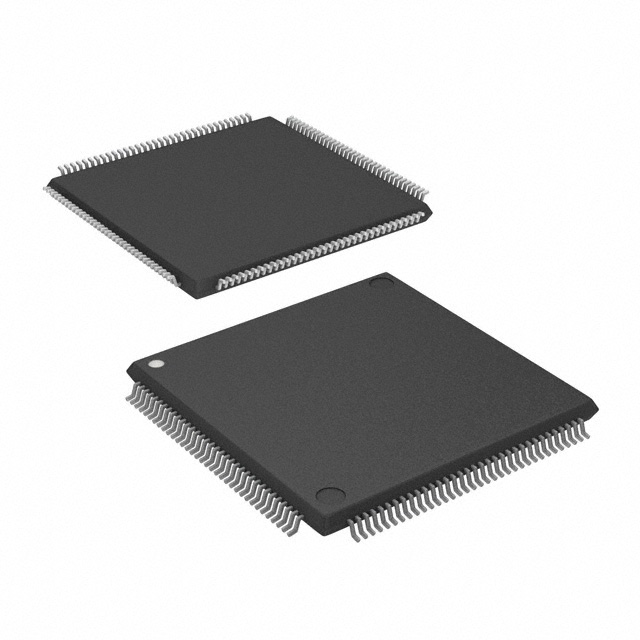 SPC5604PGF1VLQ6RMicrocontrollers | NXP Semiconductors | IC MCU 32BIT 512KB FLASH 144LQFP | 재고 | - | |
SPC5604PF1VLQ6Microcontrollers | NXP Semiconductors | IC MCU 32BIT 512KB FLASH 144LQFP | 재고 | - | |
SPC5604PGF1VLQ6Microcontrollers | NXP Semiconductors | IC MCU 32BIT 512KB FLASH 144LQFP | 644 | - | |
SPC5604PGF1VLL6RMicrocontrollers | NXP Semiconductors | IC MCU 32BIT 512KB FLASH 100LQFP | 3 | 1+: $34.92260 30+: $33.15490 | |
SPC5604PEF1MLQ6RMicrocontrollers | NXP Semiconductors | IC MCU 32BIT 512KB FLASH 144LQFP | 재고 | - | |
SPC5604PEF1VLL6Microcontrollers | NXP Semiconductors | IC MCU 32BIT 512KB FLASH 100LQFP | 재고 | - | |
SPC5604PEF1VLQ6Microcontrollers | NXP Semiconductors | IC MCU 32BIT 512KB FLASH 144LQFP | 재고 | - | |
SPC5602PEF0MLL6RMicrocontrollers | NXP Semiconductors | IC MCU 32BIT 256KB FLASH 100LQFP | 재고 | - |





.png?x-oss-process=image/format,webp/resize,h_32)


